Monday, 20 October 2014

Monday, 13 October 2014
Film Companies - Big and Small

Warner Bros. Entertainment, Inc.., an entertainment company, creates, produces, markets, distributes, and licenses various forms of entertainment and their related businesses across various media and platforms in the United States and internationally. The company specializes in various entertainment activities, including feature films, television, home entertainment/DVD, animation, product and brand licensing, interactive entertainment, comic books, digital distribution, video games, international cinemas, and broadcasting. It also develops and produces musicals and other stage productions for the studio; and operates an online store. The company was founded in 1923 and is based in Burbank, California with a network of offices and agents in North America, Latin America, Asia, and Europe. Warner Bros. Entertainment, Inc. operates as a subsidiary of Warner Communications Inc. Warner Bros. have various branches of the company; Warner Bros Consumer Products, Warner Bros Theatre Ventures, Warner Bros Pictures International and Warner Bros International Cinemas. They also own DC Entertainment and MAD Magazine.
Film4 Productions is a British film production company owned by Channel Four Television Corporation. The company has been responsible for backing a large number of films made in the United Kingdom. The company's first production was a television drama film called Walter, directed by Stephen Frears, which was released in 1982. Before 1998, the company was known as FilmFour International or Channel Four Films, later it was re-branded as FilmFour. The small company cut its budget and staff significantly in 2002, due to mounting losses. They have co-produced films such as '12 Years A Slave', '127 Hours' and '20,000 Days On Earth'. The company co-produce most of their firms with other larger companies, and rarely produce on their own.

Monday, 29 September 2014
Camera shots
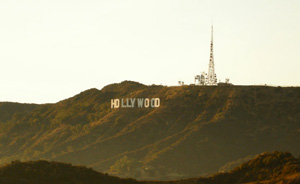
Extreme long shot - this shot is generally taken from more than a mile away, for example Hollywood. It is also known as the establishing shot. It could show the outside of a building, a landscape or even well known tourist attractions to show a well known location.
Long shot - this shot shows a medium distance, but this depends on where the audience stands looking at the screen. The long shot shows the character's full body from feet to head, and has many background images.

Medium shot - This is a closer shot than a long shot, as it shows the character from waist upwards.

Close-up shot - This shows very little background, and concentrates on either a face, or a specific detail of mise en scène. It shows the importance of things such as an expression on someone's face or words written on paper.

Long shot - this shot shows a medium distance, but this depends on where the audience stands looking at the screen. The long shot shows the character's full body from feet to head, and has many background images.
Medium shot - This is a closer shot than a long shot, as it shows the character from waist upwards.
Close-up shot - This shows very little background, and concentrates on either a face, or a specific detail of mise en scène. It shows the importance of things such as an expression on someone's face or words written on paper.
Extreme close-up shot - This is an extreme version of the close-up shot, generally magnifying beyond what the human eye would see in reality. An extreme close up on face for instance, would show only the mouth or eyes, with no background whatsoever. This could be seen as an artificial shot, and can be used for dramatic effect.

Monday, 22 September 2014
Main Exercise
Main Exercise:
The titles and openings of a new fiction film, to last a maximum of 2 minutes.
Convention:
Conventions are the generally accepted ways of doing something, and in media terms, they are generally accepted patterns of code that communicate a particular message. There are general conventions in any medium, such as the use of quotes in a print article, but conventions are also genre specific. For example, in Westerns fights scenes are generally shot from a low angle, the setting is usually dusty and desolate, and even the sounds used within the scene are conventional, such as castanets, or some sort of whistle.
Codes:
There are 3 main categories of codes, that are used to convey meanings in media messages:
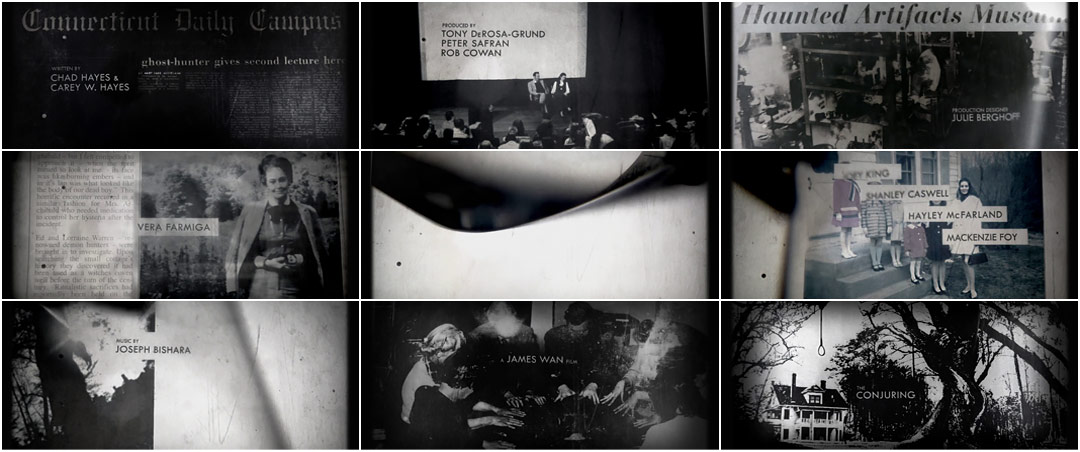
- Technical Codes, which include camera techniques, framing, depth of field, Mise en scene, editing, lighting and sound. For example, 'Saving Private Ryan'. The picture of the film stars are edited in so they look as if they are coming out of the clouds, showing their size of power and presence.

- Symbolic Codes, which refer to objects, setting, body language, clothing and colour.
- Written Codes, in the form of headlines, captions, speech bubbles and language style.
Film Openings: the purpose and conventions.
•The purpose: The
purpose
of a film opening is to show
action and
begin the viewers interest so they get immediately hooked into the film. The film
opening will
also clearly state the genre of the film, you will also most likely see either the
protagonist or
antagonist.
•Timing conventions: Most film
openings are around 2 minutes
long.
However major blockbusters may be up to 5 minutes.
•Set the scene (year
of setting, location etc.)
•Introduce the
key characters: Protagonist,
Antagonist,
sidekick etc.
•Introduce pre
plot or beginning of the
narrative.
Establishes platform/
scene.
•Key credits
such
as production
company, logos
and director.
•Usually starts
with equilibrium.
A key
event will occur.
Monday, 8 September 2014
Preliminary Exercise
Preliminary Exercise:
Produce a continuity exercise which involves a character opening a door, crossing the room and sitting down in a chair opposite another character, with whom they exchange a couple of lines of dialogue. The task should demonstrate:
Produce a continuity exercise which involves a character opening a door, crossing the room and sitting down in a chair opposite another character, with whom they exchange a couple of lines of dialogue. The task should demonstrate:
- Match on action is changing the angle and size of the shot when the character is facing towards action.

- Shot/reverse shot is when the characters are communicating to one another. when one talks it's a shoulder shot of the other character's perspective/ listening to the other character, making the audience feel like they are a part of the film.

- 180 degree rule is when the camera is shot from one side only so when the characters are communicating it shows them facing towards each other not in the opposite direction which would be shot across the line that links the characters.

http://www.youtube.com/watch?v=ABH_lpi2FvM
This is me and my groups film edit of the Preliminary Excise- We made this to show numerous shots such as, match on action shot and over the shoulder shot (obeying the 180 degree rule) we did this to show that not only could we film a short clip of shots but also use software that put together certain clips from our takes on making this short clip.
This is the finished version of our group's preliminary exercise. Overall, this was a successful end product. In the beginning, there were quite a few problems in the filming and a few more in the actions. We had some unusable scenes like failing to open a door or falling off a chair but after they were cut out the product look good. As well as that, we also took many shots of each of the scenes to make sure we had a good one or two. A bunch of the shots also needed cutting/cropping because the speech had a pause before it or the filming started after the first few words. After it was cut out and put together it looked smooth and quite...semi-professional. Another thing we need to take into account is the screen, we have to extend the size of the actual picture to cover the black border around the side. The camera was quite shaky; this was not intentional. To prevent this in future, a tripod should be used.
Me
My name is Alexis, I am 16 years old. I enjoy playing Xbox and football with friends and listening to music.
Subscribe to:
Posts (Atom)